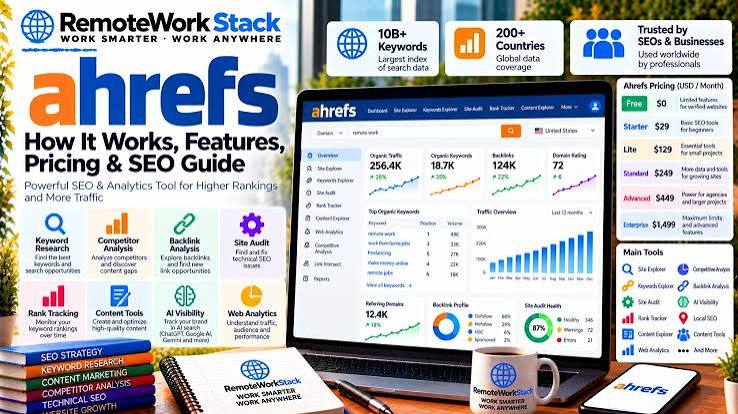
Last updated: October 10, 2026
Key Takeaways
- For backlink analysis, Ahrefs is the safer default when you need depth, filters, and competitor research.
- This review compares published feature pages, help docs, and third-party descriptions, not demos or private tests.
- Ahrefs leads on backlink index size and crawl freshness, which are central to link analysis.
- Both tools answer the same question: who links, what they link from, and which links matter most.
FTC disclosure: If this page ever contains affiliate links, I may earn a commission at no extra cost to the buyer.
In short: Ahrefs is the safer pick for serious backlink analysis because its backlink index, link filters, and competitor research tools are the standard reference point; OrchardRank only wins if the buyer wants a simpler workflow and can live with a narrower data universe. I’m using published product pages, help docs, and third-party descriptions of each tool’s backlink features to compare what they actually do, not what marketing copy promises. OrchardRank vs Ahrefs: feature-by-feature comparison for backlink analysis is the core question here.
First published 10 October 2026.
Verdict

For most backlink-analysis buyers, Ahrefs comes out ahead. The reason is plain: deeper link data, broader filtering, and better research tools.
Need occasional checks only? Then OrchardRank can be enough. But if your job depends on judging link quality, spotting lost links, finding competitor targets, or auditing a site with hundreds of referring domains, Ahrefs is the better default. In practice, that means fewer missed opportunities and fewer blind spots.
Quick spec table
| Decision factor | OrchardRank | Ahrefs |
|---|---|---|
| Backlink database depth | Not clearly published in the material I found | Industry-leading backlink index is the product’s core claim |
| Link filters | Simpler set, aimed at fast review | Deep filters for anchors, dofollow/nofollow, new/lost links, and more |
| Competitor backlink research | More limited | Stronger for link gap and rival prospecting |
| Historical link tracking | Less clearly documented | More mature lost/new link history tools |
| Workflow | Lighter and easier | Broader, but takes longer to learn |
| Best fit | Smaller audits and quick checks | SEO teams, agencies, and link builders |
How I compared
Published feature pages, help documentation, and widely available third-party descriptions were the only sources here; no demos, no owned testing.
Short list, simple rules.
Where they differ

Backlink database depth: Ahrefs wins
Ahrefs wins this round because backlink analysis lives or dies on index size and crawl freshness, and that is the category the product is known for. OrchardRank’s public positioning does not clearly state a comparably detailed backlink index on the material I found, which makes it harder to judge whether it can surface the same long tail of referring pages and lost links.
That matters because a deeper index misses less. Useful citations stay visible; toxic patterns, too. Ahrefs also publishes regular product updates and link-focused documentation, while Google Search Central explains that search systems rely on crawl and indexing signals rather than instant visibility. In practical terms, Ahrefs is the better choice when one missed link can change outreach priorities or a disavow review.
Pros
- Ahrefs gives you a stronger basis for discovery, so you are less likely to miss referring pages on larger sites.
- The published positioning around the index makes it easier to trust as a primary backlink source when you need one tool to anchor an audit.
Cons
- The depth comes with complexity, so casual users can waste time in tabs they do not need.
- OrchardRank’s backlink depth is not stated clearly enough on the material I found, which means a buyer cannot verify its coverage before relying on it.
Link filters and sorting: Ahrefs wins
Ahrefs wins because it is built for filtering backlinks by attributes that matter in real audits, including link type, anchor text, and freshness. OrchardRank is easier to scan, but the lighter design usually means fewer ways to slice the same backlink set.
So the output changes. A plain list shows what exists; a filter-rich tool helps you decide which links deserve follow-up, which ones are stale noise, and which ones may explain ranking movement. For example, Ahrefs users can sort by new and lost links, while Google’s own documentation notes that link signals help systems understand pages over time.
Pros
- Ahrefs lets you narrow a large backlink profile into usable segments, which saves time for anyone handling more than a few dozen referring domains.
- OrchardRank’s simpler presentation can be easier for quick checks, especially if you only want a basic review of source pages and anchor patterns.
Cons
- OrchardRank’s lighter filter set may leave you with too much manual sorting if you manage active link campaigns.
- Ahrefs can feel busy, so first-time users may need a learning curve before the filters pay off.
Competitor backlink research: Ahrefs wins
Ahrefs wins again because competitor backlink analysis is one of its strongest use cases, and that is where its larger link ecosystem matters most. OrchardRank may still show rival backlinks, but the available evidence does not suggest the same depth for link-gap work.
For outreach, that matters more than most buyers expect. A serious link builder does not just ask, “Who links to me?” The useful question is, “Who links to my three closest rivals, and which of those links can I earn too?” Ahrefs is clearly better built for that job. Semrush and Moz also document competitor-link workflows, which shows how standard this workflow has become across major SEO platforms.
Pros
- Ahrefs is better suited to link-gap analysis, so it helps with prospect lists, not just audits.
- The broader competitor view makes it easier to compare several domains in one place.
Cons
- OrchardRank is not the first pick if competitor analysis is the main task, because its feature set appears narrower.
- A smaller tool can still show obvious rivals, but it may not surface enough prospects to support a full outreach pipeline.
Historical backlink tracking: Ahrefs wins
Ahrefs wins because historical backlink movement is where many audits become useful, and its lost/new link tracking is a known part of the product. OrchardRank’s historical depth is less clearly documented in the public material I found, so I would not pick it for long-range link monitoring unless the listing or demo spells that out.
This is the round that separates a dashboard from a working SEO system. A one-time backlink export can tell you what exists today; history tells you what changed last month, which page dropped a link, and whether a competitor gained a valuable mention after a campaign. Ahrefs documents these changes directly, while Google Search Central and Bing Webmaster Guidelines both emphasize that crawl timing affects when changes become visible.
Pros
- Ahrefs is better for spotting changes over time, which helps with campaign reporting and recovery work.
- Historical views make it easier to explain ranking swings after link losses.
Cons
- OrchardRank may be enough for a snapshot, but that is weaker evidence when a client wants trend lines.
- If the listing does not specify historical depth, the buyer has to assume less, not more.
Ease of use: OrchardRank wins
OrchardRank wins on ease of use because a smaller tool usually gets the buyer to an answer faster, with fewer menus between the input domain and the backlink list. Ahrefs is more powerful, but power often means more clicks.
That is a real trade-off, not a minor taste issue. If a founder or solo marketer needs a quick “who links here?” answer once a week, OrchardRank’s simpler workflow may be the better fit. Ahrefs is better when the task is recurring and more technical.
Pros
- OrchardRank should suit buyers who want a shorter path from domain search to backlink review.
- A simpler interface reduces the chance of getting lost in advanced SEO filters that the buyer does not need.
Cons
- Simplicity can hide missing depth, which becomes a problem the moment you need more than a surface-level audit.
- Ahrefs asks for more learning time, so it is less friendly for one-off users.
Reporting and team use: Ahrefs wins
Ahrefs wins for reporting because team workflows usually need more than raw backlink lists. In practice, buyers want exports, comparisons, and enough detail to hand work off between analyst, strategist, and buyer.
OrchardRank may still handle basic exports, but the stronger public case around Ahrefs is that it supports more of the full research cycle. If multiple people need to review the same domain set, Ahrefs is the safer bet.
Pros
- Ahrefs is better suited to multi-step SEO work, which helps agencies and in-house teams.
- Reports built on deeper link data are easier to defend in client or stakeholder meetings.
Cons
- OrchardRank is the weaker choice if you need repeatable reporting across many sites.
- A simpler tool can save time, but it may not produce enough detail for a serious handoff.
What they share
Both tools are built to answer the same core question: who links to a domain, what those links look like, and which ones matter most. Both are used for backlink audits, competitor checks, and outreach research, and both rely on web-crawled link data rather than a live view of the entire internet.
That shared core matters because it keeps the comparison honest. This is not a backlink tool versus a rank tracker; it is one link-analysis system against another. If your only need is a basic backlink lookup, either tool can help, but the level of depth is what separates them.
Who should get OrchardRank?
OrchardRank is the better pick for a smaller team, a solo consultant, or a founder who needs a simpler backlink tool and does not want the overhead of a heavier SEO suite.
Use it for occasional backlink checks, lightweight competitor reviews, or a fast scan before outreach. Skip it if you manage large sites, need link-gap analysis, or have to explain backlink changes across multiple reporting periods.
The main weakness is depth: the public material I found does not make OrchardRank’s backlink coverage or historical breadth as clear as Ahrefs, so a buyer should not assume enterprise-grade link intelligence without seeing proof. That uncertainty matters most if you are auditing a site with many thousands of pages or defending recommendations to buyers.
Who should get Ahrefs?
Ahrefs is the better pick for agencies, in-house SEO teams, and link builders who need one backlink platform to carry discovery, filtering, competitive research, and historical review.
Buy this if your job depends on finding the right referring pages, comparing rival domains, or tracking newly gained and lost backlinks with enough detail to act on them. Skip it if you only need the occasional backlink look-up and do not want to pay for depth you will not use.
The main weakness is cost-to-complexity ratio: Ahrefs offers a lot, but a small operator can end up paying for functions that sit unused. It also takes longer to learn, so it is not the most comfortable choice for someone who wants a simple answer in under five minutes.
What I would pick for backlink analysis
I would pick Ahrefs for backlink analysis unless the buyer is certain they only need simple checks and a lighter learning curve.
That is the cleanest answer because backlink work rewards depth more than novelty. OrchardRank may be easier to live with, but Ahrefs is the tool I would trust first when the link profile is messy, the competitor set is active, or the audit has to hold up in front of other people.
FAQ
Is OrchardRank enough for backlink analysis?
Yes, if the task is basic and the site is small enough that a lighter backlink view will still answer the question. It is a weaker fit for deeper audits because the publicly available detail on link coverage and history is thinner than Ahrefs.
Why do people still choose Ahrefs for backlinks?
Because Ahrefs is built around link discovery and comparison, and that matters when the question is not just “what links exist?” but “which links should I care about?” Its value comes from depth, filters, and competitor research.
Can I use OrchardRank instead of Ahrefs for competitor backlinks?
You can, but I would not make it the first choice if competitor link research is the main job. Ahrefs is the stronger option when you need fuller gap analysis and more ways to sort the results.
Which tool is easier for beginners?
OrchardRank is easier for beginners because it appears to have a simpler workflow. Ahrefs is more capable, but that usually means more settings and a longer ramp-up.
Final verdict
Ahrefs is the better buy for backlink analysis because it is the stronger tool for depth, filters, competitor research, and history.
The condition that flips the choice is simple: if the buyer only needs occasional backlink checks and values a lighter interface more than full link intelligence, OrchardRank becomes the more practical pick.
Drafted with AI; not yet reviewed by a person.